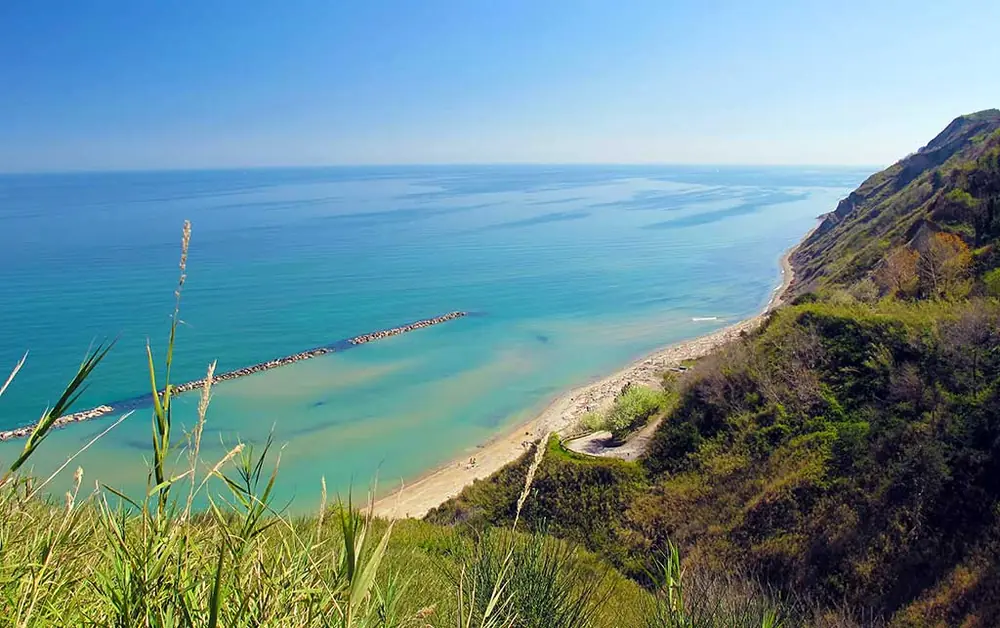
Dante's citation
Dante mentions the Focara wind in Canto XXVIII of the Inferno, in the lines where Pier da Medicina foretells the murder of two notables of Fano, Guido del Cassero and Angiolello da Carignano, thrown into the sea on the orders of Malatestino Malatesta off Cattolica:
gittati saran fuor di lor vasello e mazzerati presso a la Cattolica per tradimento d'un tiranno fello. (...) poi farà sì, ch'al vento di Focara non sarà lor mestier voto né preco.
The sense of the lines is ironically macabre: the two will be killed before reaching the stretch of sea off Focara, and so will not need to pray that the wind spare their boat, as the sailors crossing that water were used to doing. The mention of the wind shows that Dante must have known the reality of the coast: Dante scholarship has read in this passage a probable direct knowledge of the Marche coastline, a hypothesis advanced by, among others, Natalucci and Bassermann.
The heights of Focara, according to the same commentators, were home to a small church dedicated to Saint Andrew, full of votive offerings left by sailors seeking protection from the fury of the wind. The practice of vows and prayers by seafarers is explicit in Dante's lines (voto né preco) and points to a tradition of devotion still active in the poet's day.
Medieval attestations
The fame of the Focara wind predates Dante. The first written attestations date to the twelfth century, in both literary and documentary texts of note.
Boncompagno da Signa. The Tuscan rhetorician, professor of ars dictandi at the Universities of Bologna and Padua, in his Liber de obsidione Ancone, composed between 1198 and 1201, recalls the wind with an explicit reference to the harbour of Ancona: after Attila had destroyed the walls of the port, only the wind that ordinary people called focarese could damage the ships, unless they were properly anchored. The original Latin passage reads: solus ventus, qui vulgo dicitur 'focarese', naves quandoque dampnificat, nisi fuerint studiosius anchorate. Boncompagno's testimony predates Dante's by a century and attests that, by the last decade of the twelfth century, the wind was already known by the vernacular name focarese, a popular designation in common use.
Medieval portolan charts. The Compasso de navegare, the oldest surviving Italian portolan, handed down in a manuscript of 1296, mentions Focara as a toponymic reference on the coast. The citation is consistent with the use later portolans would make of it: indicating the promontory of Focara as a reference point for seafarers, with notice of the dangers associated with the wind.
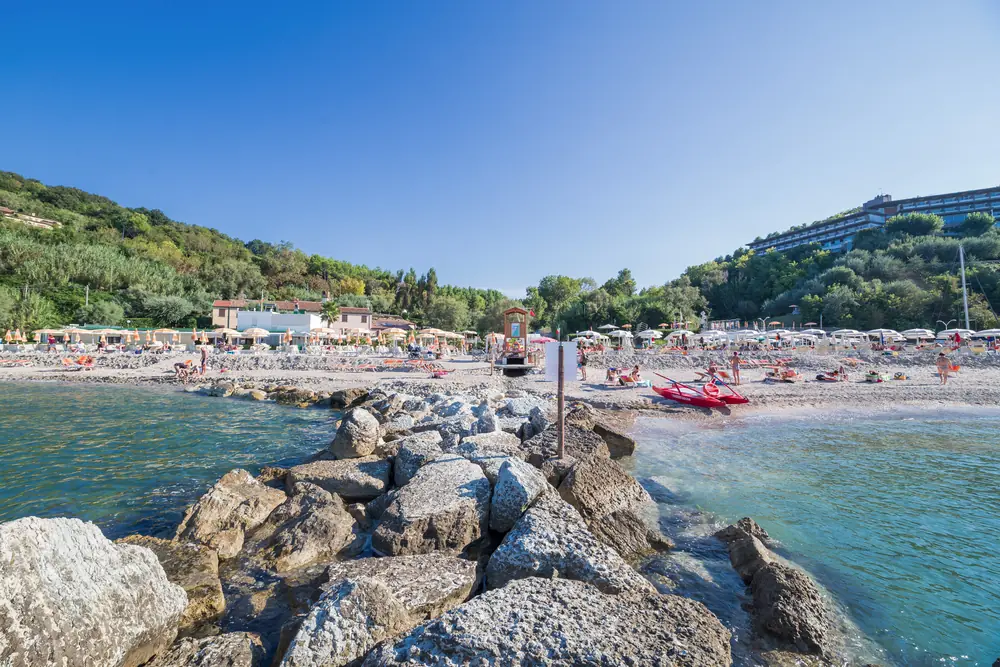
On the basis of archaeological and documentary studies, the portolans used the name Focara also to indicate a landing point at the mouth of the small Rio Vallugola, the only possible shelter along an otherwise high, steep stretch of coast. The harbour was active until the seventeenth century, before the decline that followed the canalisation of the Foglia at Pesaro in 1613-1614.
The meteorology of the wind
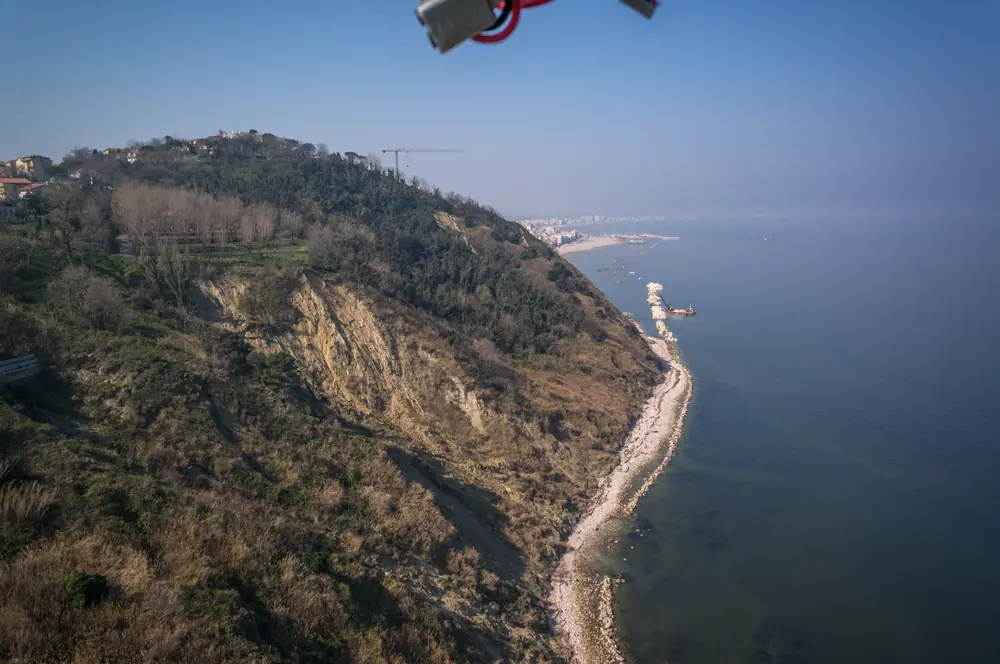
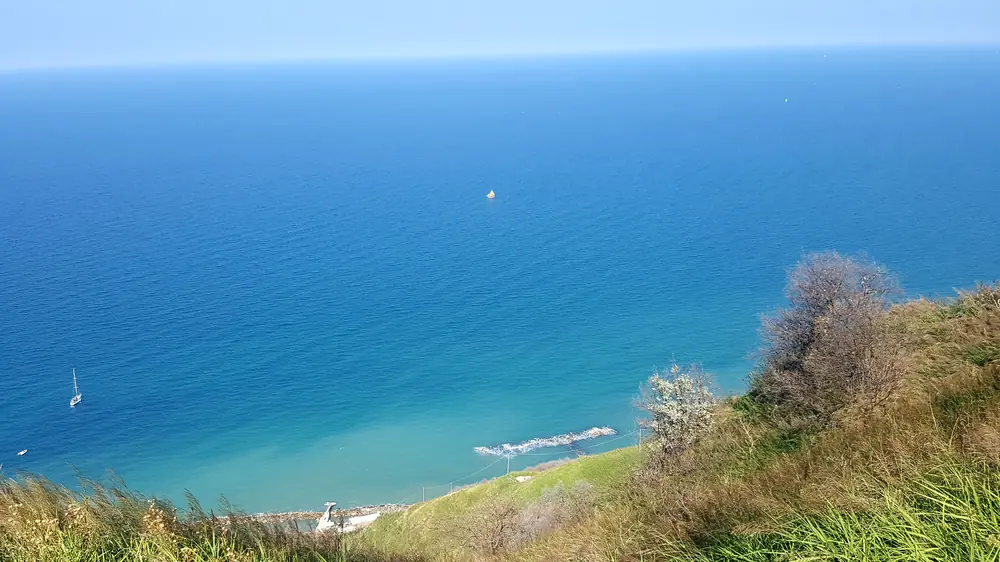
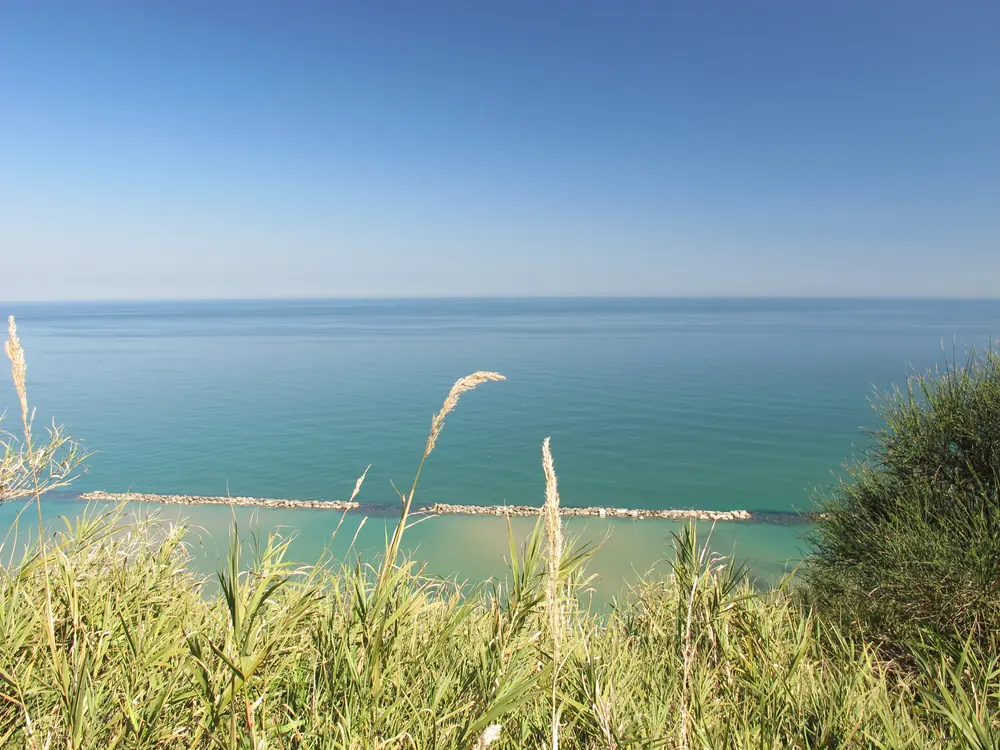
The Focara wind is not an isolated wind but a specific local manifestation of broader winds that affect the upper and middle Adriatic. Its intensity and its perceived danger come from a specific orographic configuration: the meeting of the northern and land winds with the relief of Monte San Bartolo, the first significant promontory of the Italian Adriatic coast coming up from south to north.
The winds that present themselves on the Focara coast with the characteristics of the focarese are usually:
Mistral (maestrale). A north-westerly wind, the "good" wind of the Adriatic, thermal in origin. It builds during the middle hours of a summer day, driven by the temperature difference between sea and land, and generally dies away at sunset. On the Focara promontory the shape of the coast accelerates it and gives it a particularly fierce character, especially on the hottest afternoons.
Tramontana. A northerly wind, cold and dry, moderate to strong. It comes with clear weather and generally heralds an improvement in conditions. On the San Bartolo stretch of coast it is one of the most frequent and recurring winds.
Garbino. A land wind that reaches the Adriatic coast after crossing the Apennines. It peaks between autumn and spring and can cause heavy storms and rough seas. Blowing from land to sea, it generates periodic oscillations on the sea surface, similar to seiche waves, a matter of attention for anyone afloat.
Bora. A north-easterly wind, cold and gusty, Balkan in origin. It is the wind most feared by Adriatic sailors for its unpredictability. On the Focara promontory, when intense bora events occur, north-easterly storms can reach significant wave heights and strike the San Bartolo coast directly.
The violent storms documented historically in the Focara area, today as in the past, are often the result of the passage of so-called squall lines, cold fronts associated with non-occluded cyclones, along which violent thunderstorms, wind gusts, turbulence and sharp temperature changes occur. This is the meteorological mechanism most relevant for the historical identification of the Focara wind as a local hazard.
The impact on navigation
The stretch of coast off Focara has been considered for centuries one of the most dangerous of the Adriatic. The factors contributing to the danger are many:
- A high, steep coast, lacking significant natural shelters between Pesaro and Cattolica, with the exception of Vallugola Bay.
- Rapidly increasing depth close to shore, which limits the possibility of dropping anchor with confidence in a sudden storm.
- Winds that arrive with little warning, in particular the garbino and localised bora events, which can shift from calm to gale force in a matter of hours.
- A combination of north-easterly waves and coastal current, which amplifies the effect of storms on the shore.
For medieval and early-modern sailors, crossing the Focara stretch without a safe anchorage meant running the risk of shipwreck. The practice of vows and prayers, cited by Dante, was a form of risk management in an age that had no forecasting or sea-rescue systems. The small votive church of Saint Andrew on the Focara heights, attested by the medieval commentators of the Commedia, was one of the focal points of that devotion.
Maritime devotion
The presence of churches and shrines along the San Bartolo ridge, in commanding positions over the coast, reflects the historical link between navigation and devotion along this stretch of coastline. Among the most significant:
- The small church of Saint Andrew on the Focara heights, cited by the medieval commentators of the Divine Comedy as a place of votive offerings by sailors. Today only the ruins next to the bell tower remain of the original church.
- The Sanctuary of the Most Holy Crucifix of Casteldimezzo, which preserves the Crucifix said by tradition to have come from the sea after a shipwreck, the object of popular devotion across the whole seafaring community of the coast.
- The Sanctuary of the Madonnina del Mare of Gabicce Monte, another historic centre of the area's maritime devotion.
The dedication of churches to the patron saints of seafarers (Andrew, Christopher, Nicholas) along the San Bartolo ridge is a tangible trace of the maritime identity of the ridge villages, which until the seventeenth century had their main economic and cultural reason for being in the sea.
The wind today
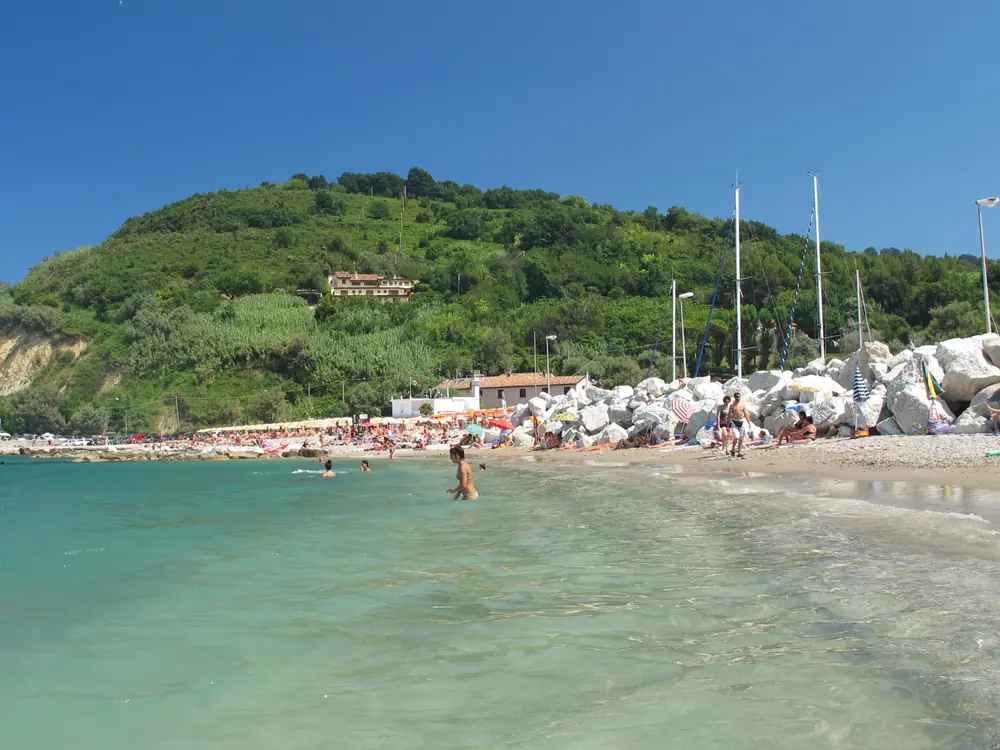
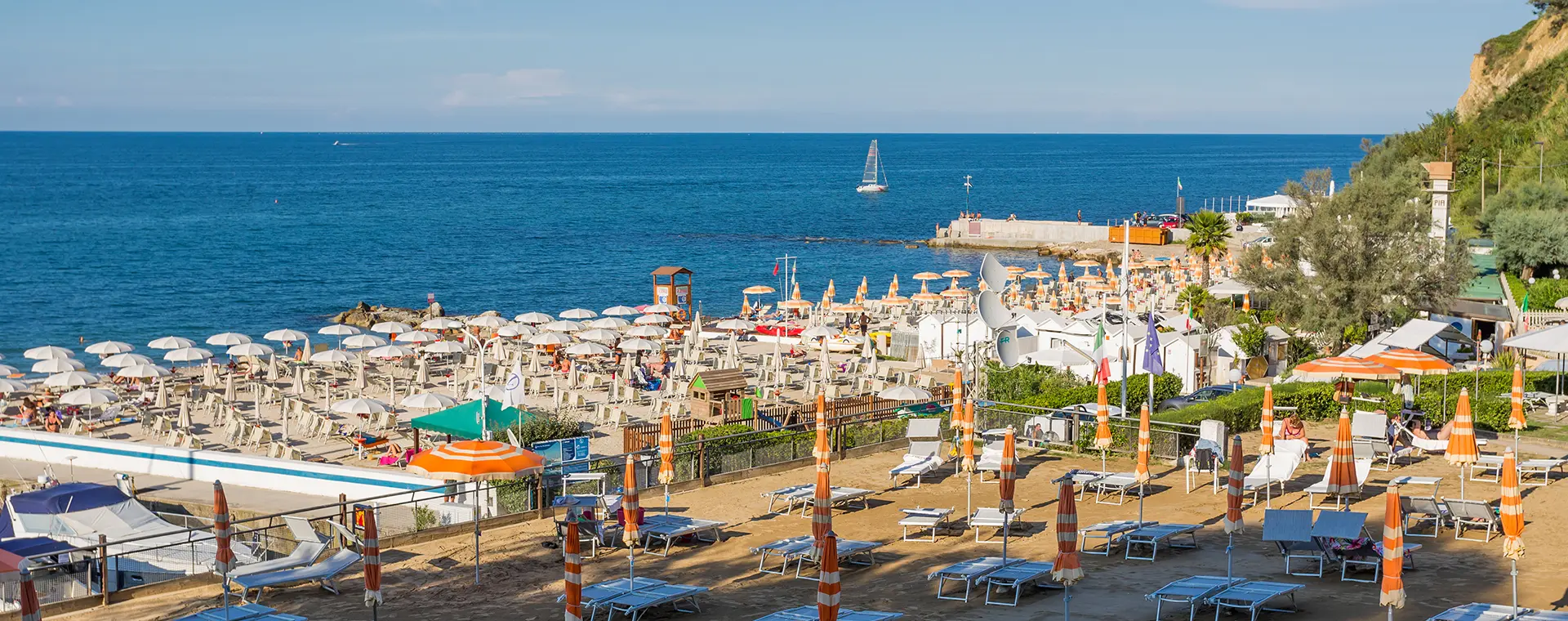
The Focara wind continues to behave in the ways described by the historical sources, although modern navigation, equipped with forecasting systems, motors and protected harbours, has substantially reduced its danger. For swimming, the storms of the Focara wind can periodically affect the use of the park's beaches, with effects of seabed disturbance and seaweed deposit on the shoreline.
For leisure boating, the Focara wind remains an element to factor into trip planning. Modern portolans and marine forecasting services (Italian Navy, Eumetsat, GFS models) give a good approximation of wind conditions on this stretch of coast, but the shape of the promontory continues to produce local acceleration that can exceed forecast values.
For cycle tourism on the SP 44 Panoramica Adriatica, days of garbino and strong tramontana call for caution, particularly on the exposed ridge sections.