The tradition and the earliest written sources
The first written record of the legend is usually attributed to Raffaele Adimari, a Rimini-based historian who in 1610 recounts a boat trip with some oyster fishermen during which, along with the shellfish, a quadrello was reportedly recovered from the seabed — a shaped stone of structural type traceable to a tower. The reference, though specific, leaves room for interpretation: Adimari does not identify the structure, gives no date and simply notes that the stone was not natural.
Through the seventeenth and eighteenth centuries the legend gathers detail: the city is described as Roman or Byzantine in origin, with colonnades, statues and fortified buildings. In some cases, eighteenth-century maps of the coast place a toponym referring to Valbruna in the waters off Vallugola. The sources are late with respect to the city's presumed existence and lack any archival evidence from before the sixteenth century.
In parallel a second tradition develops, referring to the so-called city of Conca, also said to have been submerged but placed along the present coastline of Cattolica, where a tower of the Monte Vici castle is said to have been swallowed by the sea or by the alluvial deposits of the Conca river. The two legends, sometimes confused, return the image of a coast perceived as unstable, in which the sea is said to have reclaimed parts of dry land.
Hypotheses about the disappearance
Oral tradition offers several hypotheses for the disappearance of Valbruna. The most frequent are:
- A coastal earthquake and a consequent drop in the shoreline, which is said to have submerged the settlement in a sudden event.
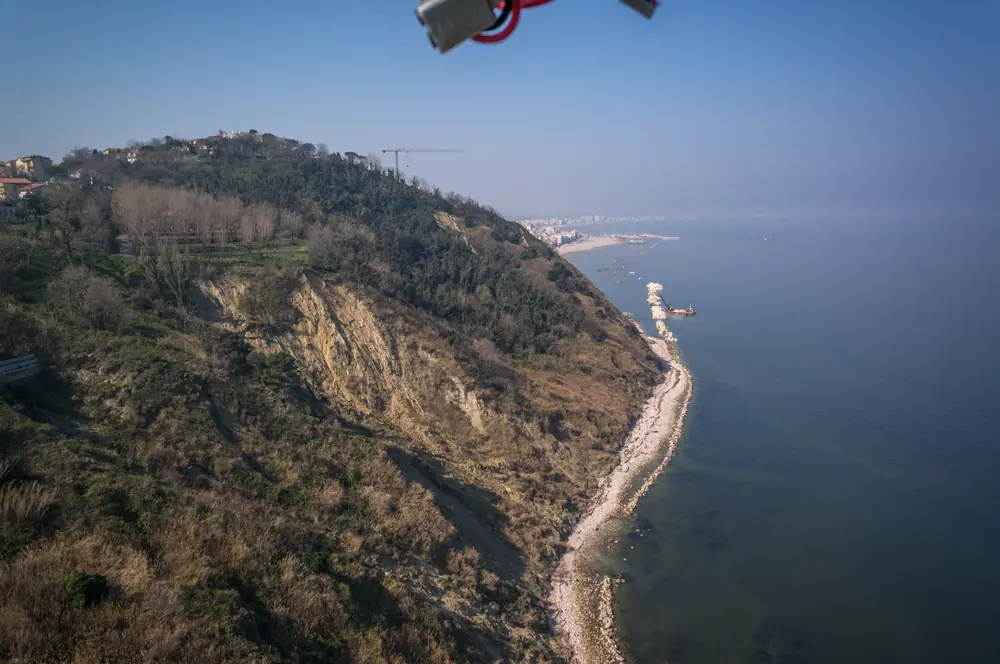
- A large landslide on the Monte San Bartolo side, which is said to have dragged into the sea a city built at the foot of the cliff.
- A human intervention: some versions of the legend ascribe the collapse to ill-considered cuts made in the seventh century into the side of the hill, which is said to have compromised the stability of the slope.
- The slow action of marine erosion, which over the centuries is said to have gradually worn down and then submerged the coastal structures.
None of these hypotheses is supported by specific geological or historical evidence. The San Bartolo cliff is in fact subject to landslides and to an average retreat of the order of a few tens of centimetres per year, but the sudden disappearance of an entire settlement remains without any stratigraphic counterpart.
The reading of historical research
More recent historical research has offered an alternative reading, in particular the studies by Maria Lucia De Nicolò of the University of Bologna, devoted to the San Bartolo harbours and to the formation of coastal legends. According to this interpretation, Adimari's observation of 1610 is reliable in terms of the actual find, but most likely refers to late medieval and sixteenth-century harbour structures now submerged, part of the coast's network of landings.
A specific reference is the so-called Punta della Valle, a stretch of the Cattolica shoreline that, unlike the rest of the Romagna coast, has retreated over the last few centuries and lost ground to the sea. The worked stones recovered from the seabed are consistent with the remains of jetties, quays or small fortifications of the Malatesta and Della Rovere periods, now broken up and buried under sediment.
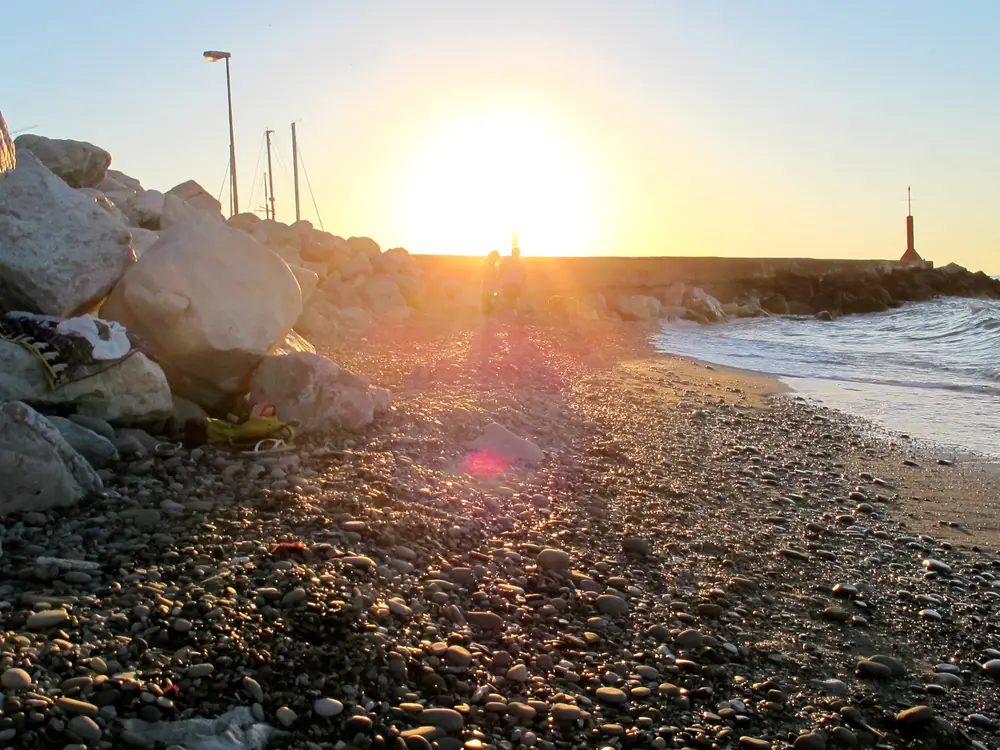
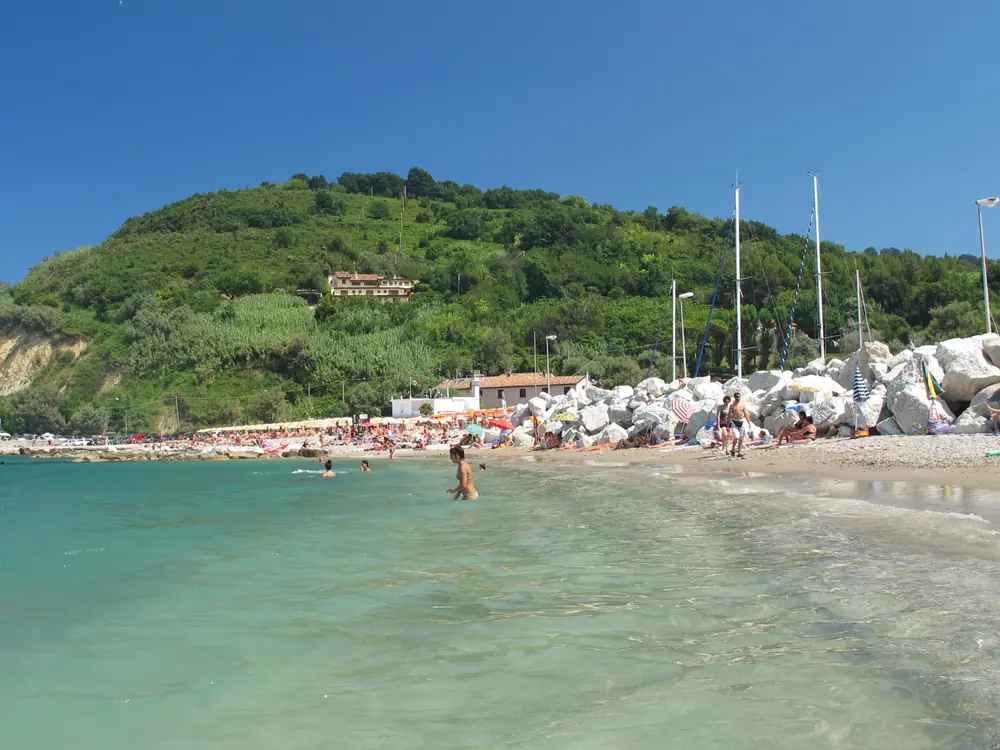
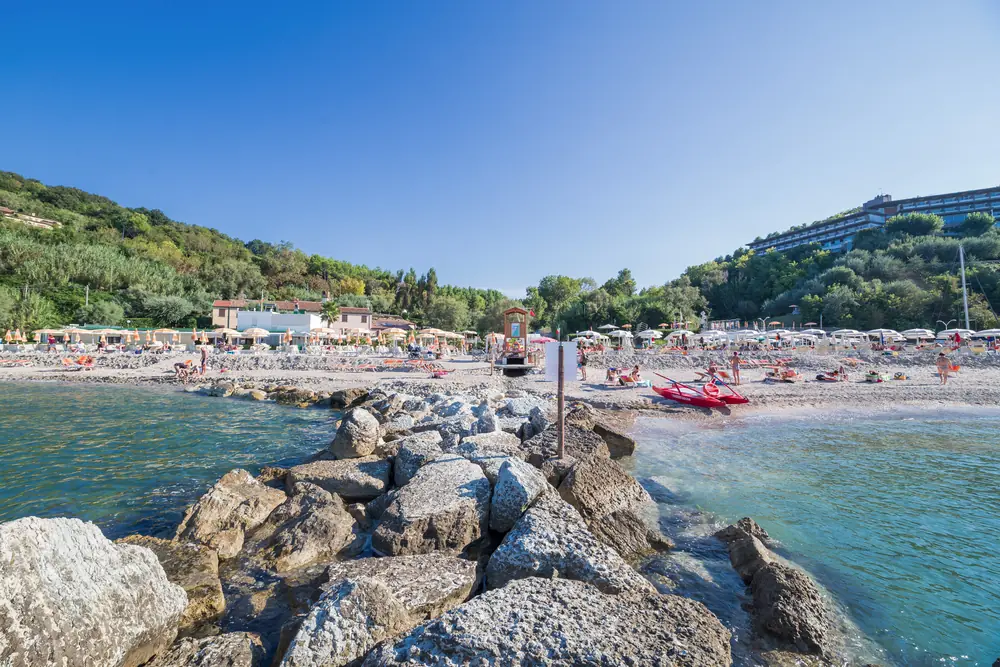
A second strand of interpretation concerns the so-called Valbruna stones, the regularly shaped stone blocks that the sea periodically returns to the bay's beaches. Geological studies identify them as cogoli, sandstone blocks from the Miocene cliff formation that have broken off from the slopes and been shaped by wave action until they take on regular geometries — striking, but of purely natural origin.
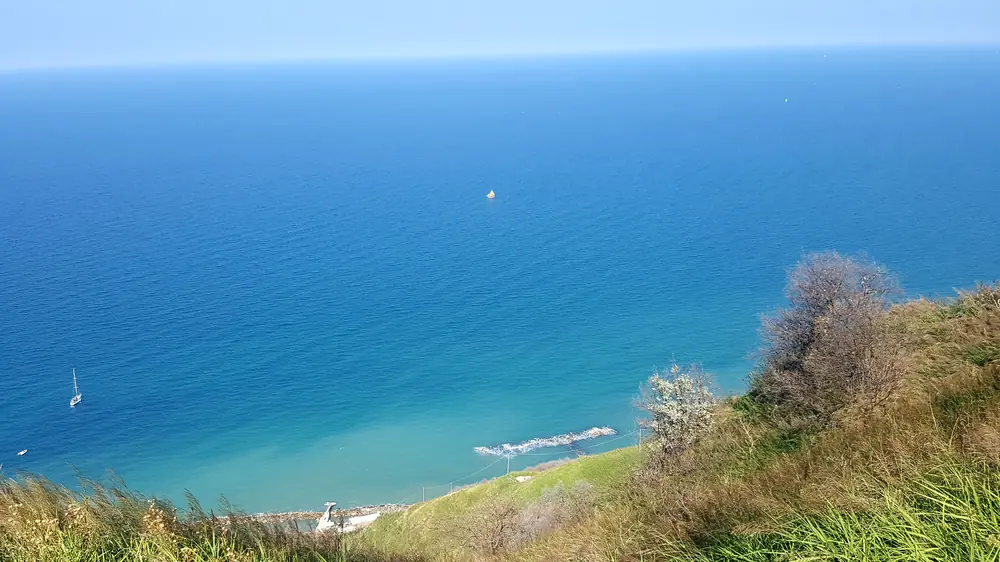
The hypothesis currently most accepted in academic circles is that Valbruna, as a submerged urban entity, never existed. It remains plausible, however, that the legend took shape from a combination of three factors: the occasional discovery of finds that really are submerged, the observation of periodic landslides on the slope, and the suggestive landscape of the bay, particularly the optical phenomenon that from Gabicce Monte makes the horizon seem to reveal landforms that do not correspond to anything real.
Underwater surveys
Dives and underwater surveys carried out in the waters of the bay have produced materials of various kinds: fragments of Roman amphorae, ceramics, bricks and shaped stones consistent with harbour structures. No find has, however, produced a coherent building complex, the stratigraphy of a submerged settlement or cartographic evidence of an urban network. The items consistent with built structures are scattered, of varying date and attributable to deposits accumulated over the centuries from shipwrecks, harbour dumping and the retreat of the shoreline.
Some summer boat trips include, in their programmes, stops over areas of interest and a telling of the legend with reference to the historical sources. These are honest popular-interest offerings that present the current picture clearly: a fascinating tradition, late sources, no evidence of a submerged settlement.
The value of the legend
The persistence of the legend of Valbruna for more than five centuries cannot be explained by the memory of a historical event alone. It reflects a trait common to Mediterranean coastal communities: the awareness that the sea, over the centuries, has redrawn the geography of the shoreline and has taken places away from inhabited land. In this sense Valbruna belongs to the family of legends about vanished cities found in many European traditions, and contributes to the cultural landscape of the coast.
For Vallugola Bay, the myth has a practical effect: it fuels visitors' curiosity, keeps interest in the history of the coast alive and intertwines with the concrete archaeological evidence without taking its place. The distinction between what is documented and what is traditional is the first step towards a fuller knowledge of the place.