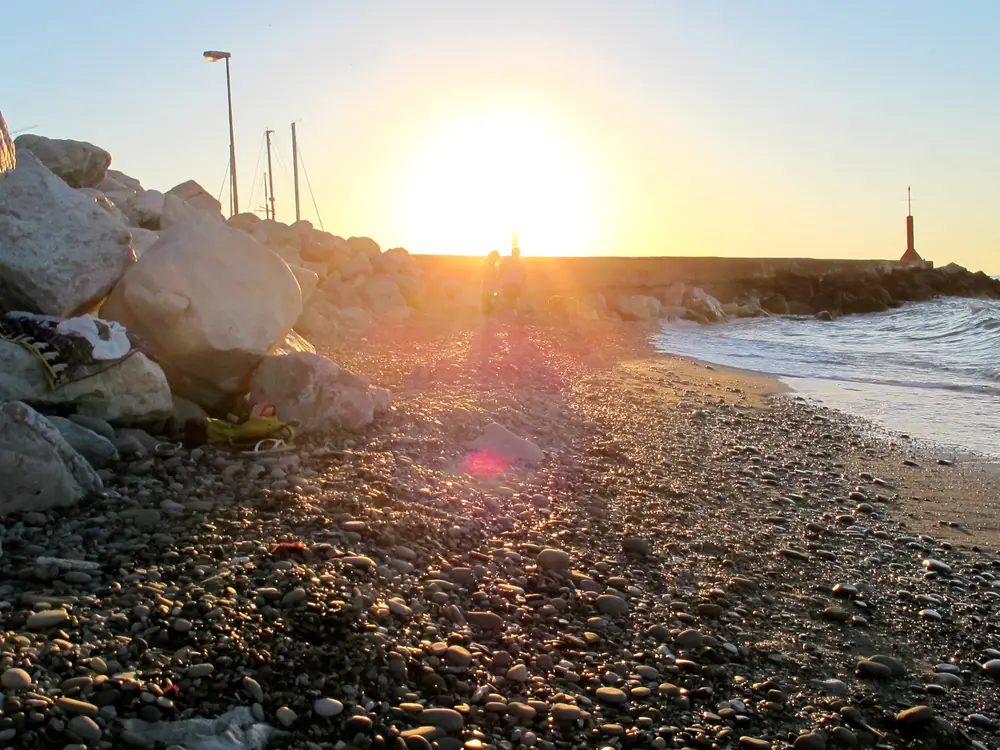
The season beyond the sea
Between October and March, Vallugola Bay turns into a place that is largely residential and pass-through. The lido is closed, the marina keeps reduced activity (some boats winter ashore, others stay at their moorings), the restaurants follow staggered opening calendars: some stay active all year with reduced hours, others close in the colder months and reopen in spring.
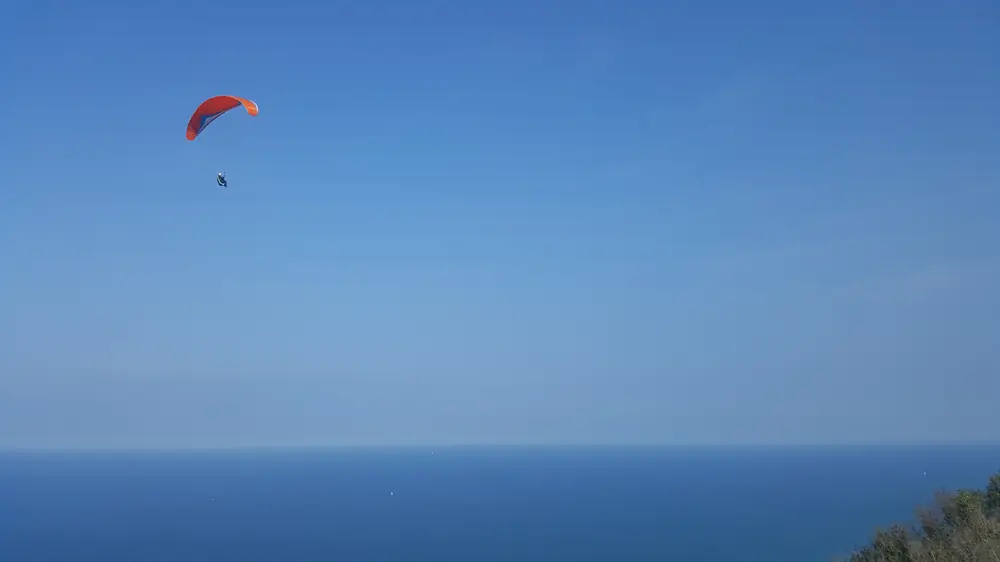
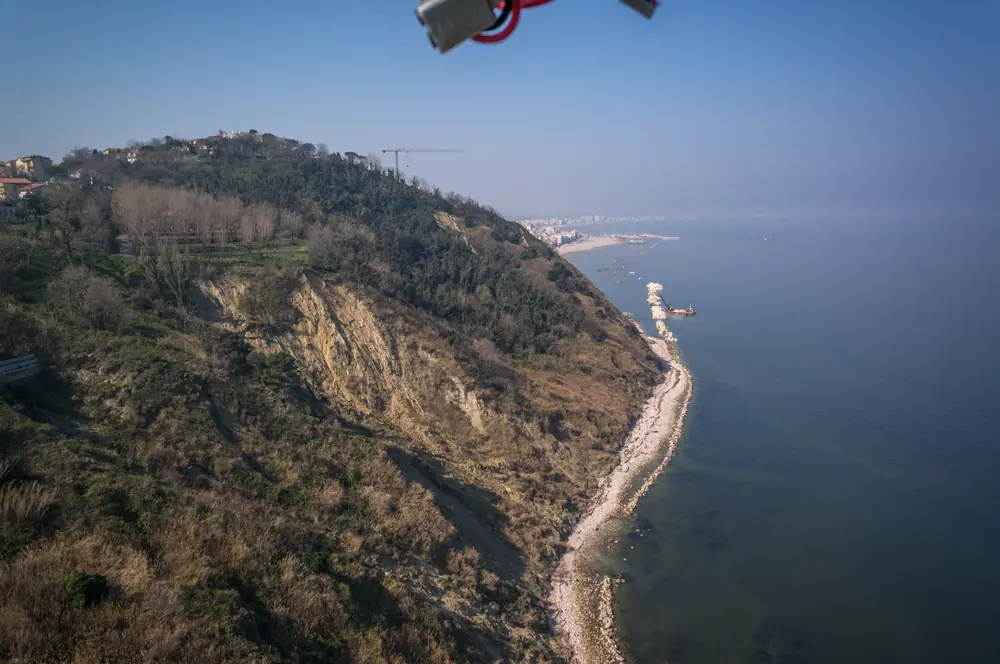
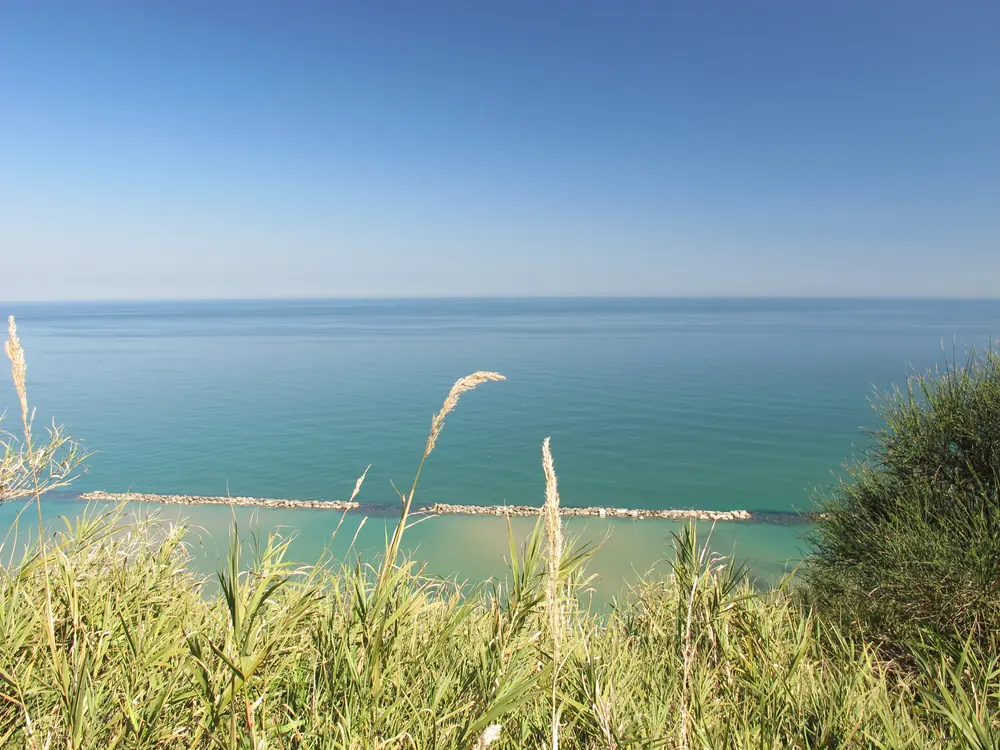
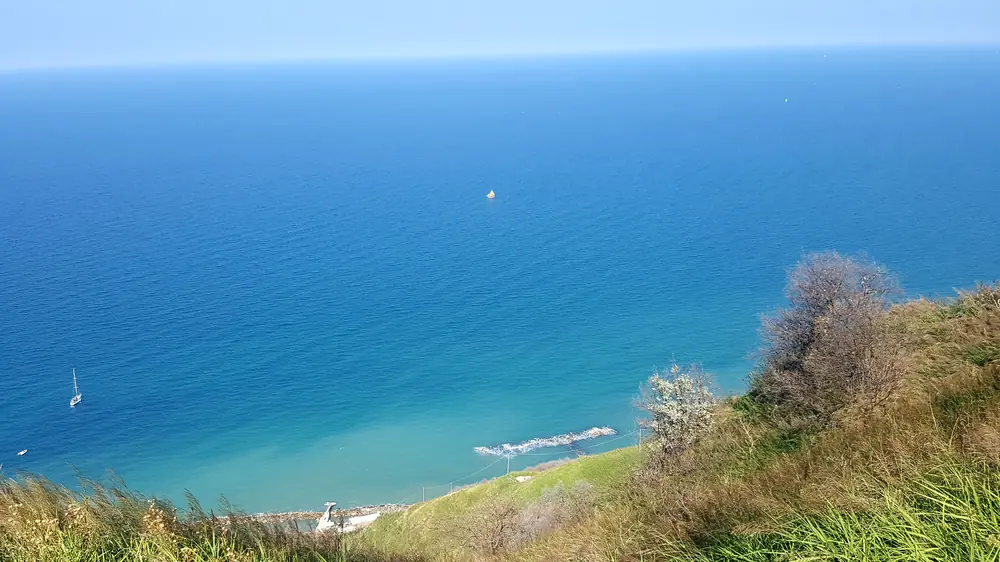
The park environment remains accessible all year, and in many respects shows itself more interesting than in summer: the vegetation takes on autumn tones (Turkey oaks, hornbeams, Mediterranean shrubs); the birdlife sees the autumn migration passages (raptors, seabirds); the belvederes offer particularly clear views after tramontana winds, with visibility that can reach the coast of Ravenna to the north and the Conero to the south.
The ridge villages (Gabicce Monte, Casteldimezzo, Fiorenzuola di Focara) keep the historic identity that, in high season, is sometimes covered by visitor numbers. The reference cities (Pesaro, Cattolica, Gradara) enter a phase of life that combines cultural offerings and seasonal food, with a calendar of events concentrated at weekends and over the festive periods.
Autumn and winter sunsets
Sunsets over the San Bartolo Park reach their fullest expression in autumn and winter. The reasons are climatic: in the cooler seasons, atmospheric humidity is lower, skies are clearer between weather fronts, and the passages of high and cumulus cloud colour the sky in the sunset hours with an intensity that summer, with its haze, rarely reaches.
The best autumn moments are September, October and November, with skies alternating with cloud passages and temperatures still pleasant for lingering at the belvederes. Winter offers shorter but more intense sunsets, with the sun dropping behind the Montefeltro inland hills and producing colour contrasts from yellow to orange, pink to violet.
For landscape photography, autumn is the park's reference season. The best viewpoints are the belvedere of Gabicce Monte, the belvedere of Casteldimezzo and the Montagnola plateau along the SP 44 Panoramica.
Migration passages and birdwatching
Autumn is the season of the autumn raptor migration, with birds crossing the Mediterranean from north to south on their way to African wintering grounds. The San Bartolo Park, the first promontory on the Adriatic coast coming up from the south, is one of the prime observation points in central Italy.
The best observation periods:
- Mid-September to October: peak passage of marsh harriers, harriers, honey buzzards, sparrowhawks, common buzzards, kites.
- November: passage of the late migrants, including some groups of cranes and storks on favourable days.
The observation points are the ridge along the SP 44 Panoramica, particularly near Casteldimezzo and Fiorenzuola di Focara, where the relief acts as an obstacle that concentrates the birds' transit at lower altitudes. The Park Authority, in collaboration with the University of Urbino, has been running a programme of systematic migration monitoring since 1998, with observation and ringing campaigns.
For birdwatching, the recommended kit includes binoculars with adequate magnification (at least 8x42), camouflage clothing (so as not to disturb the closer birds), and patience: the passage may be concentrated in specific time windows, generally between 10 am and 3 pm on days of good thermals.
In winter too, birdwatching remains interesting: along the coast, slender-billed gulls, common gulls, cormorants, red-breasted mergansers, great crested and little grebes, red-throated divers, Manx shearwaters winter. In some years the common eider is recorded, a species rare in the Mediterranean.
Autumn and winter trekking
Autumn and winter are the optimal seasons for trekking in the San Bartolo Park. The reasons:
- Moderate temperatures, between 5 and 18 degrees, ideal for sustained walking.
- Lack of crowds, with paths free and quiet.
- Visual clarity of the landscape, with vegetation that lets the shape of the relief emerge.
- Possibility to observe wildlife in conditions of lower human disturbance.
- Raking light that brings out the cliff and the historic villages.
Among the most recommended routes:
Path 151, traverse Pesaro-Gabicce. Twenty kilometres along the park's ridge, with total elevation of 600-700 metres. Walking time 7-8 hours. It is the full park route, to be tackled with good fitness and with planned return by public transport or second vehicle.
Loop Vallugola - Gabicce Monte - Vallugola. Seven kilometres, elevation 250 metres, 2-3 hours. Suited to all, with stops possible at the village of Gabicce Monte and its belvederes.
Loop Vallugola - Casteldimezzo - Colombarone - Vallugola. Ten kilometres, elevation 300 metres, 3-4 hours. Combines trekking with a visit to the village of Casteldimezzo and the archaeological site of Colombarone.
Loop Vallugola - Fiorenzuola di Focara. Fourteen kilometres, elevation 400 metres, 5-6 hours. For fit walkers; it includes the visit of the Dantean village and, fitness permitting, the descent to the beach of Fiorenzuola via the Sentiero dell'Amore.
Kit. For autumn-winter trekking: waterproof walking boots, windproof and waterproof jacket, thermal layers, hat, light gloves for windy days, water bottle, energy snacks, the park hiking map, a charged mobile phone. The short days call for adequate time planning: in December and January there are about nine hours of daylight, from sunrise around 7:38 to sunset around 16:39.
The Focara wind in winter
Winter is the season when the Focara wind, cited by Dante and the medieval sources, shows itself in its most characteristic form. The winds of tramontana, bora and garbino, blowing from the northern and western quadrants, reach the San Bartolo coast with intensity accentuated by the shape of the promontory.
The winter storms are a spectacle of the coastal landscape, to be watched safely from the ridge belvederes (Gabicce Monte, Casteldimezzo, Fiorenzuola di Focara) or from the heights above Vallugola Bay. The sound of the sea in a storm, the wash on the cliff, the deposit of seaweed and debris on the beach are elements that restore the natural dimension of the shore, beyond the seaside narrative.
For photographers and landscape enthusiasts, days of intense tramontana, generally after a weather front, are particularly significant: clean skies, clear air, visibility reaching exceptional distances (Ravenna lighthouse to the north, the Conero to the south).
The ridge villages in a quiet atmosphere
The medieval villages of the park's ridge — Gabicce Monte, Casteldimezzo, Fiorenzuola di Focara — take on a particularly intimate atmosphere out of season. The narrow streets of the historic centre, busy with tourists in summer, are almost empty between November and March. The belvederes are accessible without competition for the best viewpoints. The panoramic restaurants of the villages are generally still operating (some with reduced hours), and in winter offer regional cooking combining sea and land, with more substantial dishes than in the summer season.
Casteldimezzo. The Sanctuary of the Most Holy Crucifix is open to the public all year. A winter visit, coinciding with particular religious events (Easter Monday, Feast of the Crucifix), is an occasion to get to know the area's popular tradition.
Fiorenzuola di Focara. The village is particularly atmospheric in autumn and winter for the combination of stormy coastal landscape, Focara wind and Dantean atmosphere. A visit can be accompanied by a reading of Canto XXVIII of the Inferno in the places cited. In December, the village hosts the Borgoprese event, a display of nativity scenes along the streets of the castle.
Gabicce Monte. The village is easily reached from Gabicce Mare. The Church of Sant'Ermete, the craft workshops (some active all year), the panoramic belvederes and the village restaurants offer an upland experience combining culture and landscape.
Gradara in autumn and winter
Gradara is one of the destinations most suited to the off-sea seasons. The Rocca Demaniale is open all year (with the exception of some closing days). The village keeps its services and signature events going.
Among Gradara's annual events in the autumn-winter period:
- Castello di Natale (December). Christmas dressing of the village with markets, light installations, themed visits. It is one of the main appointments on the winter calendar of the territory.
- Gradara d'Amare (February). Event dedicated to the theme of love, inspired by the story of Paolo and Francesca. Valentine's period.
- Re-enactment events spread through the year.
The distance from Vallugola is eight kilometres, in fifteen-twenty minutes by car.
Pesaro out of season
Pesaro is a city active all year, with a cultural calendar that concentrates in the non-summer months. Among the appointments:
- Rossini Opera Festival (August, summer season, international reference).
- Mostra Internazionale del Nuovo Cinema (June).
- Theatre season at the Teatro Rossini (autumn-spring).
- Concerts and cultural events through the year, spread across Teatro Rossini, Auditorium Pedrotti, Vitrifrigo Arena, Centro Arti Visive Pescheria.
An out-of-season visit to Pesaro lets you enjoy the historic centre and the museums at a calm pace and with fewer visitors. The Sonosfera® at the Civic Museums, a hemispherical theatre for deep listening, is one of the area's most innovative cultural experiences, available all year.
Seasonal food
Autumn and winter are seasons of more substantial dishes compared with the summer cooking of the sea. The local tradition offers:
Brodetto. The fish soup of the Adriatic coast is a seasonal dish, particularly enjoyed on cold days. The Marche and Romagna variants are both present in the area's restaurants.
Montefeltro truffles. The inland hills, a short distance from the coast, are an area for harvesting white truffle (autumn) and black truffle (winter). The area's restaurants offer them in season on fresh pasta, eggs and meats.
Vincisgrassi. A rich Marche-style lasagne, typical of the cold seasons, present in some of the area's restaurants.
Stoccafisso all'anconetana and winter brodetto. Dishes of the Marche tradition, on the menus of some historic coastal restaurants.
Inland hill cooking. Grilled meats, lamb, rabbit, fresh egg pastas, cheeses of the Marche-Romagna hills (caciotte del Montefeltro, formaggi di fossa).
Wines. Bianchello del Metauro, Verdicchio dei Castelli di Jesi, Sangiovese delle Colline Pesaresi, Albana di Romagna. In autumn and winter reds and structured wines take over from the whites of the summer season.
Practical considerations
Accommodation. In autumn and winter, the offering is reduced compared with the summer season, but remains significant in the larger municipalities (Pesaro, Cattolica, Gabicce Mare). Some venues in the ridge villages and Vallugola Bay follow seasonal closures; checking in advance is advisable.
Rates. Hotel rates are significantly lower than in the summer season, in particular in November, January and February. For stays coinciding with specific events (Gradara d'Amare, Castello di Natale, Pesaro events), availability can be tighter.
Transport. The car remains the most practical means out of season, since public transport runs on reduced frequency. The Sunday closure of the SP 44 Panoramica is limited to the June-September period; in the off-season months the road is open to traffic every day.
Weather. Winter is marked by temperatures generally between 0 and 12 degrees, with lower peaks in tramontana. Rainfall is frequent between October and March, with fronts lasting a few days alternating with periods of stability. Snowfall on the coast is rare, usually a few centimetres during specific events.